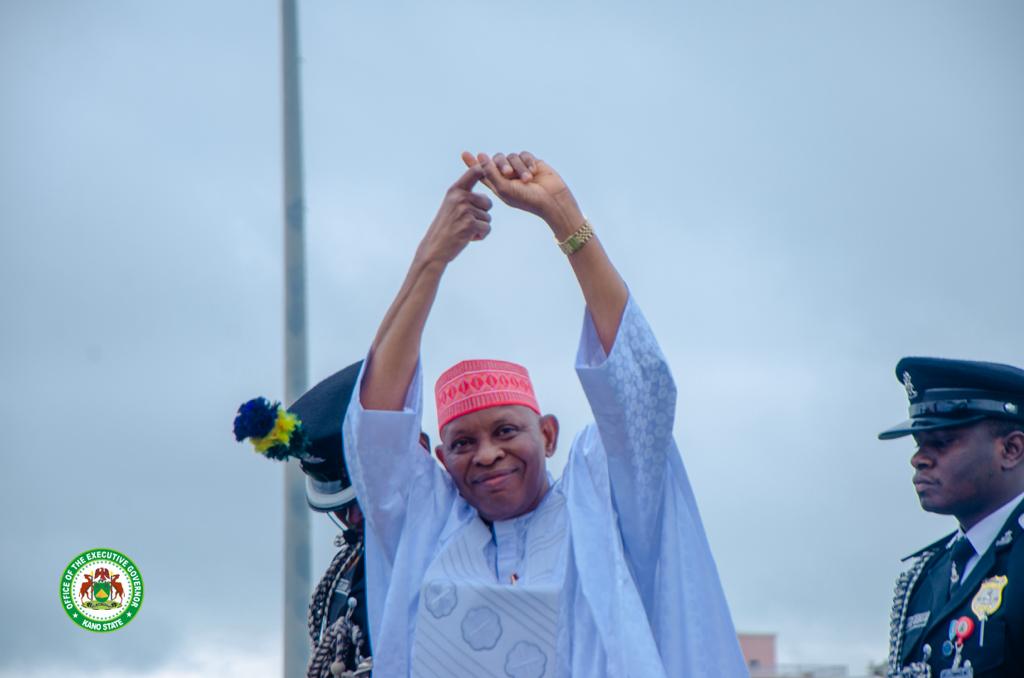
Security was on high alert at the Kano State Government House on Monday following rumours that Governor Abba Kabir Yusuf may be planning to defect from the New Nigeria People’s Party (NNPP).
At the main entrance of the Government House, a combined team of security personnel drawn from the Nigeria Police Force and the Department of State Services (DSS) was deployed to strategic points. Movement into the premises was tightly controlled, with visitors subjected to strict identification and security checks.
The development comes amid growing speculation of a possible rift between Governor Yusuf and his political mentor, Senator Rabiu Musa Kwankwaso, leader of the NNPP and founder of the Kwankwasiyya movement. Reports suggest that Kwankwaso has openly opposed any plan by the governor to defect to the All Progressives Congress (APC), warning that such a move could destabilise the NNPP and weaken the Kwankwasiyya political structure.
Governor Yusuf, however, has denied the existence of any disagreement with Kwankwaso. Despite this denial, the situation has reportedly caused tension within the NNPP, exposing signs of strain in the long-standing political alliance between the two leaders.
In a press statement issued on behalf of the NNPP at both the Kano State and national levels, the party distanced itself from any defection plan. The Kano State Chairman of the party, Hashim Dungurawa, said the party leadership was fully aware of the political developments in the state and firmly opposed any move to the APC.
“We are aware of the developments happening here in Kano State concerning some individuals who intend to defect to the APC. I want to make it clear that the Kano State party, the national party, and our national leader, Senator Rabiu Musa Kwankwaso, together with other leaders, do not approve of what is happening,” Dungurawa stated.
Kano State remains one of Nigeria’s most politically influential states due to its large voter population. It consistently ranks among the states with the highest number of registered voters and has historically played a decisive role in shaping national election outcomes. Analysts say any major shift in political allegiance by the sitting governor—especially one involving Kwankwaso, who enjoys strong grassroots support—could significantly reshape the political landscape ahead of future elections.