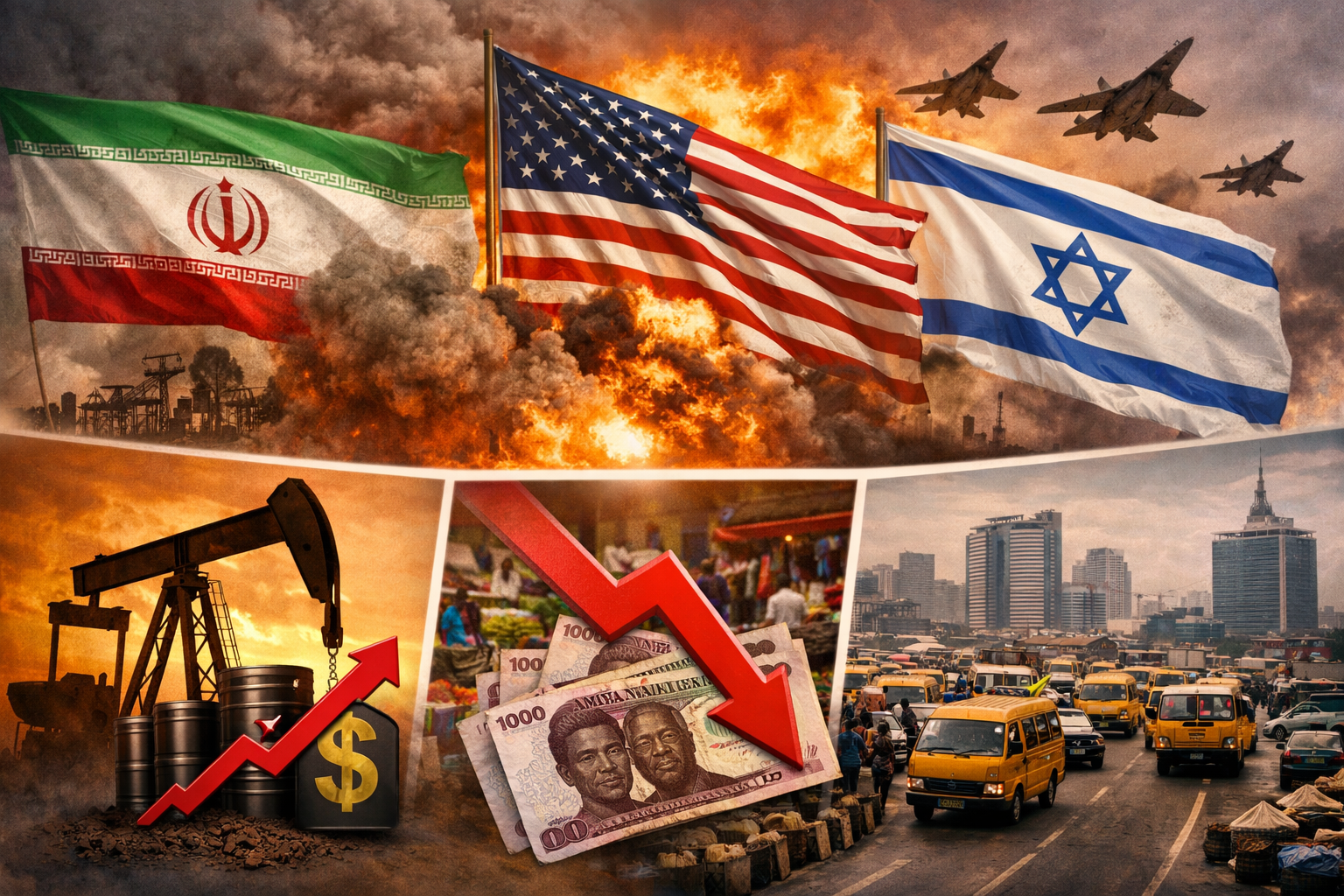
The escalating tensions between Iran, the United States, and Israel may not involve Nigeria directly, but experts say the crisis could still have significant economic and political effects on the country.
Although Nigeria is geographically far from the Middle East, global conflicts of this scale often trigger ripple effects across international markets.
1. Possible Rise in Oil Prices
Nigeria relies heavily on crude oil exports for government revenue. A major conflict in the Middle East one of the world’s key oil-producing regions — could disrupt supply and push global oil prices higher.
Higher oil prices may:
- Increase Nigeria’s export earnings
- Lead to higher petrol and transportation costs locally
- Affect fuel subsidy policies
2. Pressure on the Naira
Geopolitical instability often leads investors to move money into safer currencies such as the US dollar.
This could:
- Put pressure on the Naira
- Increase the cost of imported goods
- Contribute to inflation
3. Inflation and Cost of Living
If fuel prices and exchange rates rise, Nigerians could experience:
- Higher transport fares
- Increased food prices
- Rising business operating costs
4. Investment and Business Uncertainty
Global conflicts usually make investors cautious. Foreign direct investment into emerging markets like Nigeria may slow temporarily as investors assess global risks.
5. Nigerians in the Middle East
Thousands of Nigerians live and work in countries such as the UAE, Saudi Arabia, and Kuwait. If the conflict spreads, travel advisories or economic disruptions could affect diaspora communities and remittances.
Conclusion
While Nigeria is unlikely to be directly involved militarily, the economic consequences of a wider Middle East conflict could affect oil prices, exchange rates, inflation, and investment flows.
Experts advise close monitoring of global developments as the situation continues to evolve.