The Nigerian Meteorological Agency (NiMet) has projected early rainfall in Kano, Niger, Rivers, and 12 other states across the country, urging farmers to delay planting until the rainy season is fully established.
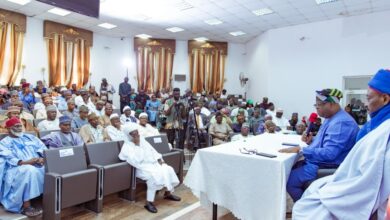
The Minister of Aviation and Aerospace Development, Festus Keyamo (SAN), disclosed this on Tuesday in Abuja while unveiling NiMet’s 2026 Seasonal Climate Prediction (SCP). He cautioned that although some states, including Lagos, Rivers, and Bayelsa, have already recorded early showers, the actual rainy season has not yet commenced.
Keyamo also warned that extreme weather conditions are expected between March and May, advising farmers and other stakeholders to rely on official forecasts before making agricultural decisions.
Highlights of the 2026 Seasonal Climate Prediction
According to the SCP report, significant rainfall is expected across southern Nigeria, alongside projections of early and late onset patterns, early cessations, and extreme weather events in different parts of the country.
Early onset of rainfall is predicted in Bayelsa, Rivers, Akwa Ibom, Cross River, Benue, Kogi, Nasarawa, Oyo, and parts of Kebbi, Niger, Jigawa, Katsina, Kano, Adamawa, and Taraba states. Conversely, Borno State is expected to experience a delayed onset.
The report also forecasts earlier-than-usual cessation of rainfall in parts of Ogun, Osun, Ondo, Imo, Rivers, Akwa Ibom, Kogi, and Niger states. Meanwhile, a delayed end to the rainy season is anticipated in Lagos, Ogun, Anambra, Enugu, Cross River, Benue, Nasarawa, and Kaduna states.
A longer-than-normal rainy season is projected for Lagos, Benue, Enugu, Ebonyi, Ogun, Oyo, Nasarawa, Anambra, Kwara, Kebbi, Kaduna, Gombe, and Taraba states. However, parts of Borno, Yobe, and Niger states are likely to record a shorter rainy season.
In terms of annual rainfall totals, most parts of the country are expected to experience near-normal rainfall compared to long-term averages. Above-normal rainfall is forecast for Borno, Sokoto, Kebbi, Kaduna, Enugu, Cross River, Abia, Ebonyi, Akwa Ibom, and the Federal Capital Territory. Below-normal rainfall is predicted in parts of Katsina, Zamfara, Kwara, Oyo, and Ogun states.
Between March and May, severe dry spells lasting more than 15 days are likely in parts of Oyo and Ogun states, while moderate dry spells are expected in Ekiti, Kogi, Osun, Ondo, Ogun, Edo, Ebonyi, Abia, Cross River, Delta, and parts of Kwara. During the June–July–August period, severe dry spells of up to 21 days are predicted in parts of Bauchi, Borno, Gombe, Jigawa, Katsina, Kano, Kebbi, Kwara, Nasarawa, Niger, Oyo, Plateau, Sokoto, Yobe, and Zamfara states.
The Little Dry Season (LDS), commonly known as the “August Break,” is expected to commence in late July and may be severe and prolonged in Lagos, Ogun, Ekiti, and parts of Oyo states, lasting between 28 and 40 days. A moderate effect is anticipated in Ondo and parts of Kwara and Edo states.
Speaking at the event, the Permanent Secretary of the Federal Ministry of Aviation and Aerospace Development, Dr. Yakubu Adam Farmata, described the SCP as a key tool for integrating climate science into national planning. He emphasised that the annual prediction is not merely a scientific exercise but a strategic initiative designed to equip policymakers and stakeholders with timely and actionable climate information.