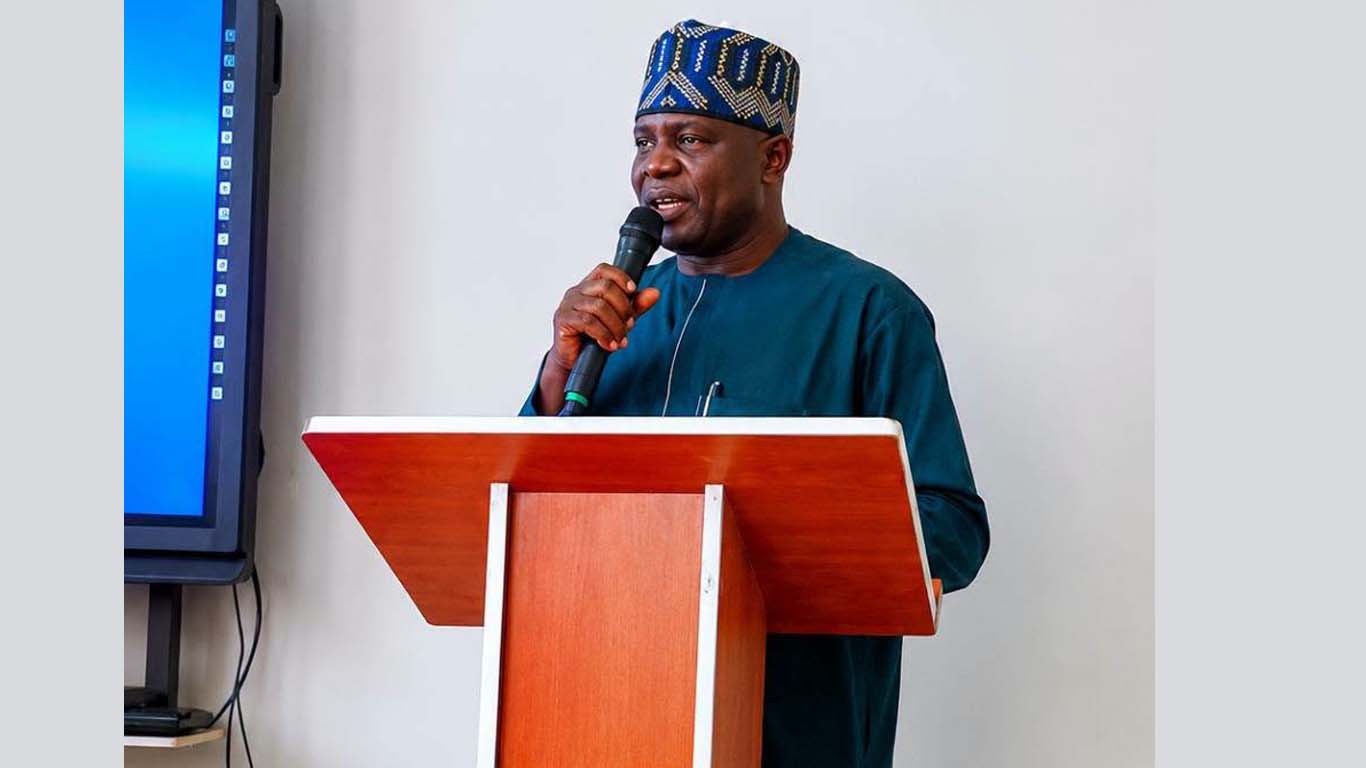
The Abdullahi Mahadi Library of Gombe State University has organised its second In-House Capacity-Building Workshop for Library Non-Teaching Staff. The workshop aims to enhance the quality, efficiency, and professionalism of service delivery within the university library system. The opening ceremony was held on Monday, 29 June 2026.
The opening ceremony attracted principal officers of the university, members of the library staff, and other stakeholders committed to strengthening library services. The workshop was formally declared open by the Deputy Vice-Chancellor (Administration), Professor Danladi Mohammed Umar. He represented the Vice-Chancellor, Professor Sani Ahmed Yauta.
Also in attendance were the University Bursar, Alhaji Hassan Shehu, and Alhaji Sani Jalo of the Bursary Department. Their presence underscored the university’s commitment to supporting library development.
In his welcome address, the University Librarian, Dr Henry M. Abareh, emphasised the importance of continuous staff development. He said the workshop was designed to equip library non-teaching staff with knowledge, practical skills, and professional competencies. These are needed to meet the evolving demands of contemporary university library services.
Delivering the Vice-Chancellor’s goodwill message, Professor Danladi Mohammed Umar commended the University Librarian for his innovative leadership. He noted that his initiatives have continued to reposition the Abdullahi Mahadi Library as a centre of excellence. He applauded the dedication of the library staff and urged participants to apply their new skills.
The workshop is themed “Enhancing Library Service Delivery in the University Library System.” It is expected to provide participants with practical insights, contemporary strategies, and best practices. The goal is to improve operational efficiency, strengthen professionalism, and enhance user satisfaction.
This capacity-building workshop demonstrates Gombe State University’s commitment to developing its library staff and improving service delivery. The initiative is expected to benefit the entire university community by enhancing the quality of library services. Participants are now equipped with skills to better serve students, faculty, and researchers.