Airline Stocks Tumble as Oil Prices Surge Amid Intensifying Iran War
Airline shares across Asia dropped sharply on Monday as rising oil prices and the escalating conflict involving the United States, Israel, and Iran created new challenges for the aviation industry.
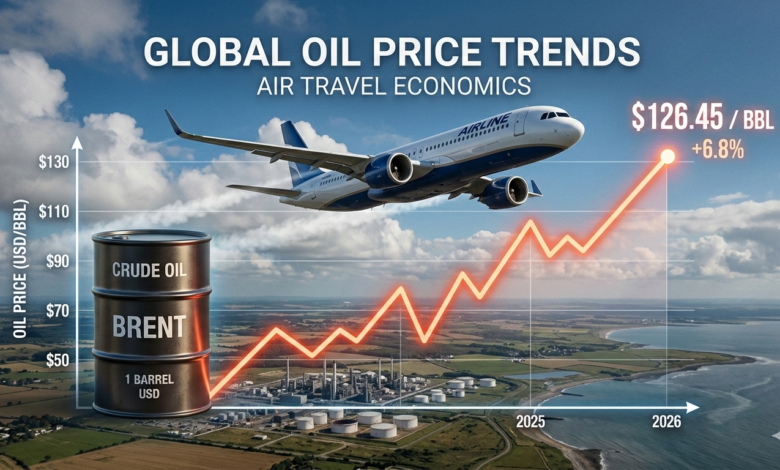
The ongoing war has pushed global oil prices significantly higher, with crude oil jumping about 20% in early trading—the highest level recorded since July 2022. Analysts warn that fears of supply disruptions and shipping challenges in the Middle East are fueling the surge.
The conflict has also caused widespread travel disruptions. Many passengers are paying extremely high prices to leave the Middle East, rushing to airports at the last minute or travelling overland to safer transit hubs. In some cases, passenger planes have even been escorted by fighter jets as they exit the region.
With several countries closing their airspace due to concerns about missile and drone attacks, commercial flights have been severely limited. As a result, some travelers have turned to private jets while charter services attempt to evacuate thousands of stranded passengers.
According to aviation data company Cirium, more than 37,000 flights to and from the Middle East were cancelled between February 28 and March 8 following the start of the conflict.
Aviation analysts say the airline industry was already facing difficulties before the crisis. Political uncertainty, economic pressures, and supply chain challenges had already strained airline operations.
Brendan Sobie, an independent aviation analyst based in Singapore, noted that the war has added even greater uncertainty to the industry.
Fuel costs remain one of the biggest concerns for airlines. Experts warn that while crude oil prices have surged by about 20%, jet fuel prices often rise even faster because of limited supply, increasing operating costs for airlines already dealing with longer flight routes and additional crew demands.
Airlines often use hedging strategies to protect themselves from sudden increases in fuel prices through financial contracts. However, such strategies can sometimes backfire if fuel prices drop, leaving airlines locked into higher-than-market rates.
Travel Disruptions Continue
The ongoing conflict has forced airlines to reroute flights, carry additional fuel, or make extra refueling stops to avoid unsafe airspace.
Major Middle Eastern carriers such as Emirates, Qatar Airways, and Etihad Airways normally handle a large share of travel between Europe and Asia, as well as routes connecting Europe to Australia, New Zealand, and Pacific Island nations. The disruption of their operations is affecting global travel flows.
Meanwhile, the government of Australia has advised family members of its diplomats in the United Arab Emirates to leave the country following the escalation of the conflict. Several Gulf cities recently experienced Iranian bombardment, which briefly forced the closure of Dubai International Airport.
Authorities at Muscat International Airport in Oman have also asked private jet operators to limit additional flights, prioritizing government and commercial aviation operations amid ongoing airspace restrictions.
In addition, Turkish Airlines and other carriers have suspended flights to Iraq, Syria, Lebanon, and Jordan until at least March 13.
The U.S. Department of State confirmed that the United States has already carried out multiple charter flights to evacuate thousands of American citizens from the Middle East since last week.
Meanwhile, Air India has increased the number of flights to destinations in Europe and North America through March 18, as travelers seek routes that avoid Middle Eastern airspace.
As tensions continue to rise, pilots say that the growing number of global conflicts—including those in Ukraine, Afghanistan, and Israel—are adding significant mental pressure. Many pilots now face the challenge of navigating increasingly restricted airspace while also monitoring potential threats from military drones and ongoing hostilities.