Who Is Alex Barbir?
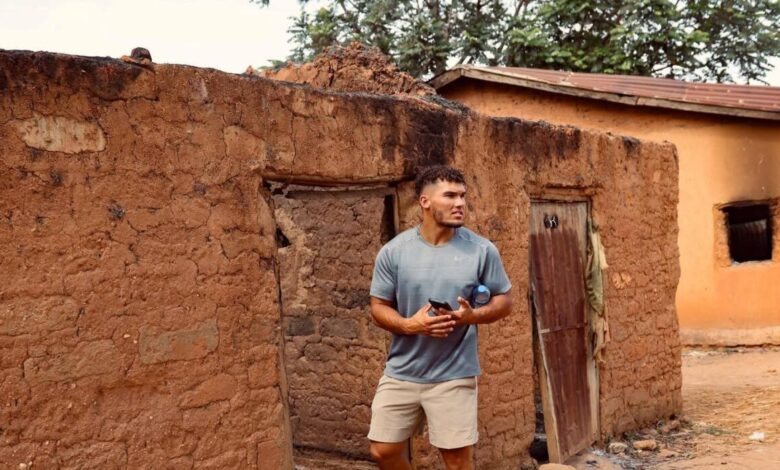
Alex Daniel Barbir, an American former college football player who later ventured into humanitarian work, has recently attracted attention due to his activities in Nigeria’s Middle Belt region.
Born on August 17, 1997, in Lawrenceville, Georgia, Barbir grew up in Cumming, Georgia, alongside his brother, Josh Barbir, a physician and captain in the United States Army Reserve. Alex first gained recognition as a talented athlete at South Forsyth High School, where he played as a powerful and athletic football kicker.
He later committed to Rutgers University before switching to play for the Penn State Nittany Lions, one of the top college football programs in the United States. However, his sporting career suffered a setback after a serious hip injury—a torn labrum that required surgery—forcing him to step away from competitive football in 2018.
Following the injury, Barbir transferred to Liberty University, where he focused on education and faith, eventually enrolling in the Liberty University College of Osteopathic Medicine with the intention of pursuing a career in medicine, similar to his brother.
His sporting story took a dramatic turn in 2020 when he made a surprise return to the Liberty football team. On November 7, 2020, he made headlines across the United States after kicking a 51-yard game-winning field goal against Virginia Tech, a moment widely celebrated as one of the most significant victories in the school’s football history.
After gaining national recognition, Barbir moved into humanitarian work. He founded a brand known as Building Zion and has been associated with the American non-governmental organisation Equipping the Persecuted (ETP), which supports humanitarian activities in different parts of the world, including Nigeria.
Barbir has been involved in relief and reconstruction efforts in parts of Nigeria’s Middle Belt affected by violence. However, his activities and public messaging have sparked debate and controversy, with critics raising concerns about how he portrays Nigeria’s complex security and religious conflicts to international audiences.
Observers say the situation highlights the broader challenges of addressing insecurity, humanitarian crises, and inter-communal tensions in Nigeria, where different groups have also suffered from attacks by armed groups in recent years.
The discussions around Barbir’s work continue as stakeholders call for balanced narratives and collaborative approaches to peacebuilding and humanitarian support in affected communities.