Nigerian Navy Deploys 326-Member Marine Force to Secure $16.6bn Offshore Assets
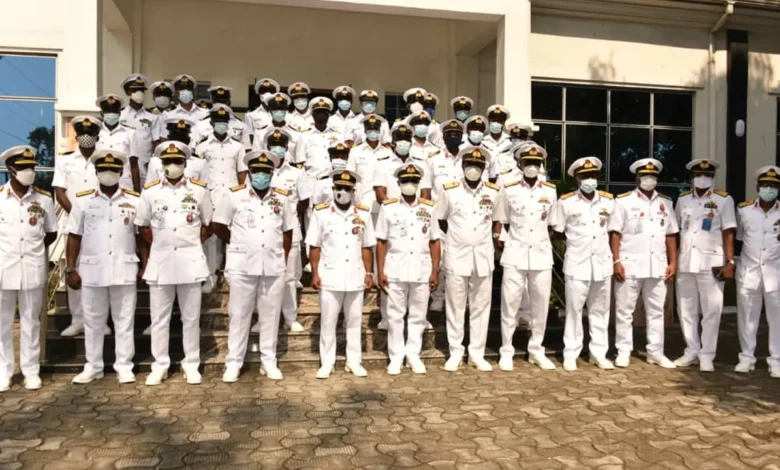
The Nigerian Navy has deployed a 326-member Marine Force to safeguard $16.6 billion worth of offshore oil and gas investments in the Niger Delta.
The specially trained marines, equipped with aerial, ground and amphibious capabilities, will also support internal security operations, particularly in riverine areas and remote hinterlands.
Unveiling the unit, the Chief of Defence Staff, Olufemi Oluyede, described the development as a landmark achievement in Nigeria’s maritime security framework.
He charged the marines to remain disciplined and mission-focused, cautioning that they would encounter dynamic and unconventional security threats.
“You have undergone rigorous physical conditioning, mental resilience training and advanced tactical exercises aligned with Special Forces Tier 2 standards,” he said.
“The adversities ahead will test your strength and resolve. Stay intellectually agile, tactically innovative and decisive. Let your actions reflect integrity, professionalism and patriotism.”
Oluyede noted that Nigeria holds a strategic position in the Gulf of Guinea, a critical maritime corridor tied to major oil and gas resources, adding that the new force would boost stability and protect national economic interests.
He also emphasized the need for close collaboration with other security agencies, maritime stakeholders and coastal communities to strengthen security and enhance public trust.
The Chief of Naval Staff, Idi Abbas, disclosed that the Nigerian Navy Marines was officially established on June 1, 2025, with training for the pioneer batch beginning on August 14, 2025. After six months of Special Operations Tier 2 training, the force is now fully prepared for deployment.
Commandant of the Nigerian Navy Marines Training Centre, Olayinka Aliyu, explained that the unit was designed as a combat-ready formation capable of operating across maritime, riverine, littoral and inland terrains.
According to him, the training programme covered endurance drills, amphibious manoeuvres, marksmanship, close-quarters combat, survival techniques, small-team tactics and multi-domain integration, including land and jungle warfare exercises conducted in Ogun State.
He added that the training regime was deliberately structured to be intensive and comprehensive, ensuring the marines are physically resilient, tactically versatile and mentally prepared for complex security operations.