Wase Rock: Plateau’s Natural Wonder
Wase Rock remains one of Plateau State’s most iconic natural landmarks and a symbol of culture, history, and tourism in Northern Nigeria.
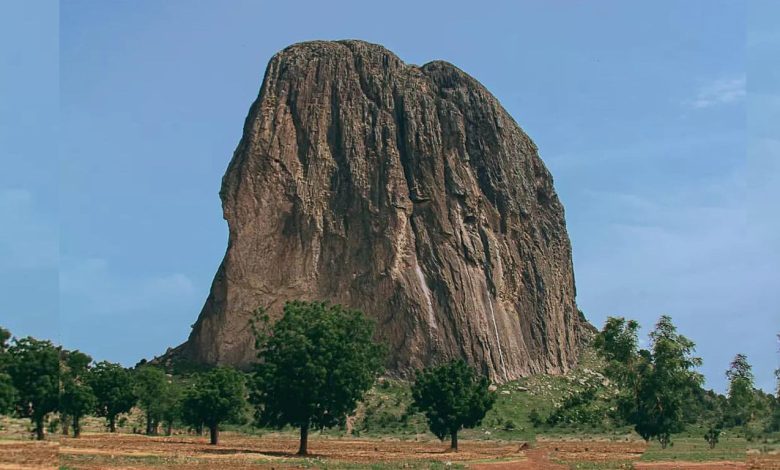
Wase Rock stands as one of the most remarkable natural landmarks in Nigeria and Africa. Located in Wase Town of Plateau State, the massive volcanic rock dominates the surrounding plains and has become a major symbol of history, tourism, culture, and tradition in Northern Nigeria.
Historical records show that Wase Town was founded around the early 19th century during the expansion of the Sokoto Caliphate. The town later became an important emirate under Bauchi before gaining its independent traditional status. 
Wase Rock itself is believed to be the remains of an ancient volcano. Geologists describe it as a volcanic plug or trachyte neck formed millions of years ago after volcanic activity shaped the Benue Rift region. Over time, erosion removed the softer surrounding materials and left the giant rock standing alone above the savannah plains. 
The rock is known locally as “Gwauron Dutse” in Hausa language. Many local communities also regard it as a sacred and symbolic site connected to the history and identity of Wase people. 
Wase Rock rises approximately 298 metres (978 feet) above the surrounding plains and reaches about 543 metres above sea level. Some geological sources place the visible elevation around 295 metres from the Benue Rift floor. 
The rock has steep vertical sides and a narrow split near its summit. Because of its height and isolated position, it can reportedly be seen from nearly 40 kilometres away. 
The area surrounding the rock serves as a protected wildlife zone covering more than 321 hectares. It is one of the few breeding locations for the Rosy White Pelican in Africa. 
During Eid-el-Fitr and Eid-el-Kabir celebrations, Wase Rock becomes one of the busiest gathering points in Wase Town. Families, tourists, youths, and visitors often visit the area for relaxation, sightseeing, horse riding, cultural displays, and photography.
Traditional leaders and residents also organize local cultural activities around the festive period. The rock provides a scenic background for celebrations and has become closely associated with the Sallah atmosphere in Wase Emirate.
Many residents describe Sallah around Wase Rock as a period of unity, tourism, and cultural pride, especially for indigenes returning home from different parts of Nigeria.
Wase Rock occupies an important place in the traditional identity of the Wase Emirate. The rock appears in stories, oral traditions, and local narratives passed from one generation to another.
The emirate itself remains one of the historic traditional institutions in Plateau State. Local communities including Fulani, Basharawa, Tarok, Jukun, and Hausa communities maintain deep cultural connections with the area. 
Traditional horse riding processions, cultural dances, and Emirate celebrations often attract attention during major Islamic festivities in Wase Town.
Nigeria is home to several famous rock formations, but Wase Rock remains unique because of its volcanic origin and isolated appearance.
Zuma Rock near Abuja is perhaps Nigeria’s most famous rock formation due to its location along the Abuja-Kaduna highway. However, Wase Rock is more volcanic in structure and stands more independently above the plains.
While Zuma Rock is associated with myths and spiritual stories, Wase Rock combines geology, wildlife conservation, and traditional heritage.
Olumo Rock is historically important because Egba warriors used it as a refuge during inter-tribal wars. Unlike Olumo Rock, Wase Rock is not mainly known as a defensive shelter but as a volcanic inselberg and tourism monument.
Olumo Rock also has developed tourism infrastructure including elevators and stairways, while Wase Rock remains more natural and less commercialized.
Idanre Hills features multiple hills and ancient settlements. Wase Rock, by contrast, stands alone as a single dramatic volcanic structure rising directly from the plains. 
Across Africa, Wase Rock is often compared to volcanic and standalone rock formations in East and Southern Africa.
Table Mountain is globally famous for tourism and cable-car access. While Table Mountain is larger and more commercially developed, Wase Rock remains culturally significant and geologically rare within West Africa.
Mount Kilimanjaro is Africa’s tallest mountain and an international climbing destination. Wase Rock is much smaller but remains one of the most recognizable isolated rock formations in Nigeria.
Sugarloaf Mountain is internationally famous for its dome-like structure. Geographers sometimes compare Wase Rock to similar isolated formations because of its steep slopes and dramatic visibility across surrounding plains.
Plateau State is widely known as the “Home of Peace and Tourism,” and Wase Rock contributes significantly to that identity. 
Tourism experts believe the site has major untapped economic potential. With improved roads, hotels, cable attractions, museums, and conservation programmes, Wase Rock could become one of West Africa’s leading eco-tourism destinations.
The surrounding environment also supports wildlife, bird watching, local crafts, and cultural tourism.
Wase Rock remains one of Nigeria’s most extraordinary natural monuments. Beyond its geological importance, the rock represents the history, culture, tourism, and traditional identity of Wase Emirate and Plateau State.
Its volcanic origin, towering appearance, wildlife importance, and role during Sallah celebrations continue to make it one of the most respected and admired natural landmarks in Northern Nigeria and Africa.