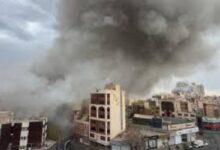
US–Israel–Iran War (Day 18): Allies Reject Trump’s Request to Secure Strait of Hormuz
The war involving the United States, Israel, and Iran has entered its 18th day, with military strikes intensifying and casualties continuing to rise. According to recent reports, more than 1,500 people have been killed since the conflict began, with over 1,400 of the deaths recorded in Iran.
As tensions escalate, the conflict is expanding beyond the battlefield, with diplomatic disagreements emerging among U.S. allies over control of the Strait of Hormuz, a key global oil shipping route.
Allies Reject U.S. Request on Hormuz
Several countries have declined a request from U.S. President Donald Trump to assist in securing the Strait of Hormuz from Iranian influence.
Earlier reports indicated that Washington had asked NATO allies to deploy naval forces to help maintain access to the strategic waterway, which carries a significant portion of the world’s oil supply.
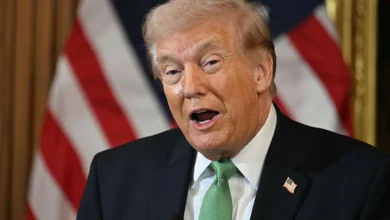
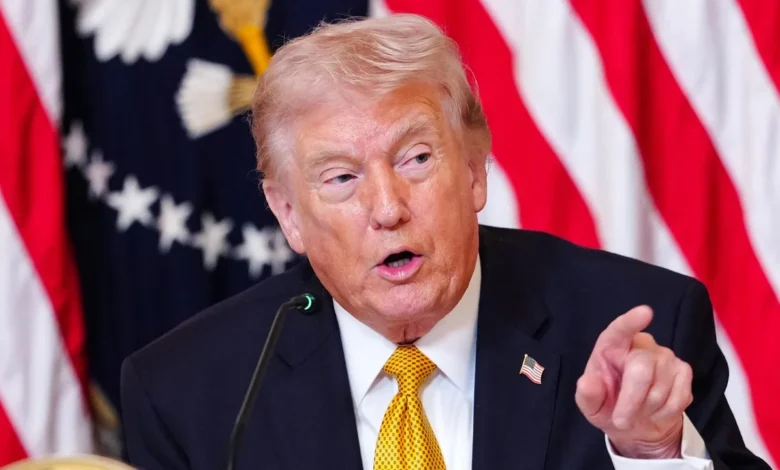
On Sunday, President Trump warned that NATO could face a “very bad future” if member states failed to support the mission.
“It’s only appropriate that countries benefiting from the Strait help ensure that nothing bad happens there,” he said.
However, a number of nations have rejected the proposal. Australia, Japan, Poland, Sweden, and Spain have all stated they have no plans to deploy military ships to the region.
European leaders also voiced opposition to military involvement. Germany’s Defence Minister, Boris Pistorius, said Berlin would take no military part in operations in the Strait.
Similarly, Italy’s Foreign Minister, Antonio Tajani, said Italy would not participate in any naval deployment, stressing that diplomatic solutions should take priority over military action. Germany and Greece have also ruled out involvement in the mission.
Trump Criticises Allied Response
Speaking at the White House on Monday, President Trump expressed frustration over the reluctance of several allies to assist the United States in protecting oil tankers passing through the Strait.
According to reports, Trump said while some countries were willing to help, others were less supportive despite longstanding partnerships with the United States.
“Some are very enthusiastic about it, and some aren’t,” Trump said. “Some are countries that we’ve helped for many years. We’ve protected them from horrible outside sources, and they weren’t that enthusiastic.”
He did not disclose which countries had expressed interest in joining the proposed mission.
U.S. Military Casualties Increase
The number of U.S. troops wounded during the conflict has risen to about 200, according to the U.S. Central Command (CENTCOM).
Military officials reported that around 180 of the injured soldiers have already returned to duty, as most sustained minor injuries. However, about ten soldiers remain seriously wounded.
The injured personnel were deployed across several locations, including Kuwait, Saudi Arabia, the United Arab Emirates, Jordan, Bahrain, Iraq, and Israel.
Meanwhile, 13 U.S. soldiers have been confirmed killed since the war began.
Iran Denies Direct Talks With U.S. Envoy
Iran’s Foreign Minister Abbas Araghchi has dismissed claims that he recently held direct communication with U.S. envoy Steve Witkoff.
In a post on social media platform X, Araghchi stated that his last contact with the U.S. official occurred before the United States and Israel launched their military campaign against Iran.
“My last contact with Mr. Witkoff was prior to his employer’s decision to kill diplomacy with another illegal military attack on Iran,” he wrote.
He suggested that reports of renewed communication were intended to mislead oil traders and the public.
Iran Vows to Decide Outcome of the War
Iranian officials continue to maintain a defiant stance as the conflict intensifies.
The spokesperson for the Iranian military, Ebrahim Zolfaghari, stated that the outcome of the war would be determined on the battlefield rather than through online narratives.
“You started it, we will finish it,” Zolfaghari said, emphasizing Iran’s right to defend itself against attacks from the United States and its allies.
He also warned that any military action launched from U.S. bases in the region could trigger further retaliation.